
With no less than 106 army lists released in the last year,
it’s the perfect time to be thinking about exactly what makes a list
competitive. After all, it’s useless to assess the power of army rules unless
you know what they’re making up for, and this is primarily a product of what
they’re ‘missing’.
As it turns out, there are about 7 core capabilities that an
army wants to have access to, and every one that they can’t access makes the
list fundamentally weaker. Some of these are more important than others, and
none of them are truly essential, but every one that a list can’t access
reduces its capacity to reliably win games. As such, this kind of thinking
makes for a great way to assess all the new armies to see how competitively
viable they are. And once you’ve picked an army, it’s always smart to try to
fit in as many of these elements as you can.
Without further ado, let’s dive straight into perhaps the
most fundamental element…
Efficient battleline

Almost every competitive list is based off a solid line of
warriors. They tend to provide most of a list’s damage output, secure most of
the objectives, and above all keep the rest of the list safe. If you don’t have
a line of warriors to throw in front of your opponent’s tricks, then they will
ultimately have a huge amount of control over the pacing of the game. Their
heroes will fight yours on their terms and not on yours, and you will be unable
to reliably stop them from getting their models where they want to go. Basic
lines of warriors are truly so valuable, and almost every list will want to
field 30-40 of them.
Given this, you really do want to have access to efficient troops.
If you’re overpaying by even 1 point per model on these guys, then your
opponent will effectively get 4-5 extra models over you for free. And
conversely, being even half a point undercosted on something like your Depths
Goblins can equate to being 4 models up on where you ‘should’ be. That’s really
powerful, and gives your list a heap of extra capability.
Relevantly, your battleline need not be elite, or durable, or heavy-hitting, or even necessarily numerous, just efficient. 15 Beornings is an efficient battleline, as is a swarm of Moria Goblins, a well-buffed Shire horde, an Easterling phalanx or even an Éored of Sons of Éorl. Sometimes a more elite or hard-hitting battleline will be better, sometimes a cheaper horde. The key aspect that you should look for here is something that you’re happy to have taking up space on the frontline that isn’t overcosted.
Mobility

Mobility is honestly a huge topic that deserves its own
article, because there are lots of kinds of mobility that serve different
purposes. Easy access to Heroic March (including via a Drum) is one kind,
letting your whole army cross the board at a decent speed. Having enough models
(that aren’t too reliant on auric buffs for efficiency) that can spread out and
be in multiple parts of the board is another. Having individual fast models
that can sneak off a board edge or jump on an Heirloom are another, with speed
(and, sometimes, not having the Beast keyword) being more important than
durability or hitting power for these roles.
Certain scenarios will incentivise some of these kinds of
mobility over the others, but the more you can access the more easily your list
will compete in a variety of missions.
Focussed damage output

Killing stuff is important, because dead enemies can neither
kill you nor score VPs. An efficient battleline can absolutely kill enemies,
and I think people often underestimate how big a percentage of their kills come
from their warriors. But it generally does so in a fairly random manner across
the battleline and over time, rather than in any specific position.
Put another way, 40 Orcs may well kill 4-5 Gondorians in a
given turn. But in any given fight, it’s hard to rely on your Orcs killing a
Gondorian. The enemy might just roll a six, or you might whiff on your duel or
wound rolls. And similarly, basic Orcs will eventually drag down most enemy
heroes. But on any given turn, that hero can very plausibly roll a six and push
everyone back.
As such, it’s valuable to have sources of focussed damage
output that you can apply in a specific spot and reliably kill a specific
model. This can let you clear an objective at speed, assassinate an enemy hero
or banner, or smash a path through a battleline or a chokepoint.
For a lot of armies, this focussed damage will come from
either heroes or monsters, because they bring a lot more damage output in a
smaller space than most warriors. But it could also come from elite infantry
like Berserkers, pikes to put extra dice into key fights, or magic/auric buffs that make one area of the board really
swing your way like Wrath of Bruinen or Thranduil’s bubbles. They key is just
having a way to apply damage output precisely, rather than just slowly grinding
the enemy down across the board.
Anti-hero options

Unfortunately, dastardly opponents have also thought about
the above issue, and so they’ve probably brought some heroes or monsters along
to provide their own focussed damage output. As such, you want to have a way to
deal with them yourself.
Exactly how much you care about this will vary, depending on
where your heroes sit in the combat spectrum. If they’re super killy
themselves, then great, that will often solve your problem; send your Elessar
into their hero and they probably won’t have a hero anymore. And on the other
end of the spectrum, if your heroes are really weak themselves, then it’s also less
of an issue because you don’t need those heroes on the frontline. Ugluk doesn’t
really need to be anywhere near the enemy’s focussed damage output, so you can
hide him and your random Captains behind waves of warriors and not regret their
absence too much. You can still run into problems with enemies hiding their
warriors behind scary heroes or monsters you can’t fight, but at least those
heroes or monsters are just killing your efficient battleline and not your
heroes.
Where things get tricky is with middling sort of heroes (or
monsters, or expensive warriors), who are too weak to take on your opponent’s
heroes but too expensive to justify leaving out of the fight. As I discussed in
my first ever article on this blog, the worst thing for a combat hero to
be is just a little bit weaker than your opponent’s combat heroes. In lists
reliant on these middling heroes you will particularly want to bring along
other tools that can shut down enemy heroes, like magic, heroes with Heroic
Defence, or the ability to shoot/Hurl into the hero’s combat.
Incidentally, this sort of thinking is a perfect example of
why Cave Trolls aren’t great in Depths of Moria. Enemy heroes don’t want to
fight the Balrog, they can’t fight the Watcher, and they’ll never kill enough
Goblins to matter. But a Cave Troll is both weak enough to be killed easily,
and expensive enough to matter when it happens. Models like this dramatically
increase how vulnerable your list is to heroes, and thus how much you need to
invest in anti-hero tech.
Banner VPs

Banner VPs objectively are not essential. About half of the
Top 5 armies in the game don’t have access to banner VPs and are clearly not
suffering too much for it. Moreover, my personal experience (based on the 120-something games I’ve recorded in TTA this edition) is that I’ve only had a
single game come down to a margin of less than the banner VPs on offer. That
is, in every other game the eventual score was sufficiently clear that you
could have removed banner VPs and not had any impact on the result.
In fact, the army that started down on banner VPs actually
won more often than the army that started with them in my data set, which seems to imply
that banner VPs are a disadvantage (although I would caution against reading
into this too much, because there are surely skewing factors and the small
sample size at play here). But it’s certainly clear from this little sample
that banners aren’t being the difference maker in many of my games this
edition. Put another way, banner VPs don’t seem to actually swing many games
one way or the other, for all that they feel unfair at times.
In saying all of that, it’s obviously better to have VPs than not to have them, and armies that can’t access banner VPs need to have a bit of extra oomph somewhere or other. So if a list can’t bring along a banner or some other equivalent (Rosie Cotton, apparently), you should be looking for some extra power somewhere in their toolkit.
Archery (or ways to mitigate it)

Shooting may be becoming less important than it was in the
first half of the edition, but it’s still powerful in quite a lot of scenarios
and matchups. As such, having access to efficient shooting is a real benefit to
a list.
Of course, lots of army lists just don’t have any good
options here, and that’s not the end of the world. Instead, they may be best
off leaning on tools to either mitigate enemy shooting (via things like
Blinding Light, or just having durable or numerous troops that can cop a few
volleys), or to cross the board quickly (such as with Heroic March or a Drum,
or just higher movement speed).
Again, it isn’t a total loss if you can’t access these tools; Depths has done well all edition without any great shooting or anti-shooting-tricks, because you can overcome many problems with sufficiently-efficient Goblins. But if you don’t have some way to deal with enemy shooting, you’re occasionally going to have a bad day in To the Death against a gunline. That’s especially true if you don’t have a good source of focussed damage output, so make sure you fit in at least one or the other in most armies.
Tricks

Our final element is one that can go under the radar a
little, because it’s a fairly amorphous concept. What I’m trying to capture
with ‘tricks’ is some way of interfering with your opponents plans, ideally by
reaching behind their lines somehow. In short, you want some way to mess with
enemy models that aren’t on the frontline or immediately behind it. Lists that
don’t have tricks can find themselves frustrated by an opponent who keeps their
banner/leader/warrior-holding-a-relic just behind their lines in total safety.
In short, you want some way to counter the opponent’s efficient battleline by
reaching beyond it: you want to be able to exert your damage output onto
the models that you choose, rather than just the basic warriors that your
opponent wants you to be killing.
The archetypal form of these tricks is magic, with Compel being particularly devastating as a way to reach behind the enemy lines and move enemy models into vulnerable positions. Things like Spectres and Sentinels are similarly useful, but powerful shooting like Legolas or a Dragon can fulfill similar roles. Mobility (particularly from flyers) can also do the job of reaching behind the enemy lines, and even scary heroes or monsters that can easily Combat/Barge/Hurl through the enemy can threaten their backfield in a pinch. It’s a broad category that can capture lots of things, but ultimately it’s an important one if you don’t want your opponent to be able to set the pace of the game.
Worked examples
Putting this all together, we can start to see why some
lists have proven capable of great things, while others have struggled to break
out.

Looking at Army of the White Hand first, they have a fairly
efficient battleline, excellent mobility in every sense, some of the best
anti-hero tech in the game, solid archery, banners, and a comical pile of tricks. They historically lacked focussed damage output (not having any heroes scarier
than a Scout Captain will do that to a list), but even that is mitigated by being able to drop in Gorulf. Overall, it’s clear that it’s a list that can do just
about everything you would want an army to do, so it’s no surprise that it’s
been winning plenty of events.

On the flipside, poor Army of Thror is missing all sorts of
things. Their battleline is moderately efficient still, but they have trouble
with every kind of mobility. They have solid focussed damage output from all
their heroes, and they have enough durable heroes that they’re okay on the
anti-hero front. D7 across the board helps a lot against shooting, but they
have neither banner VPs nor the tricks to impact the opponent’s banner. With so
many missing elements of a competitive list, you’re looking for some real power
in their profiles and army rules, and it’s just not there anymore.
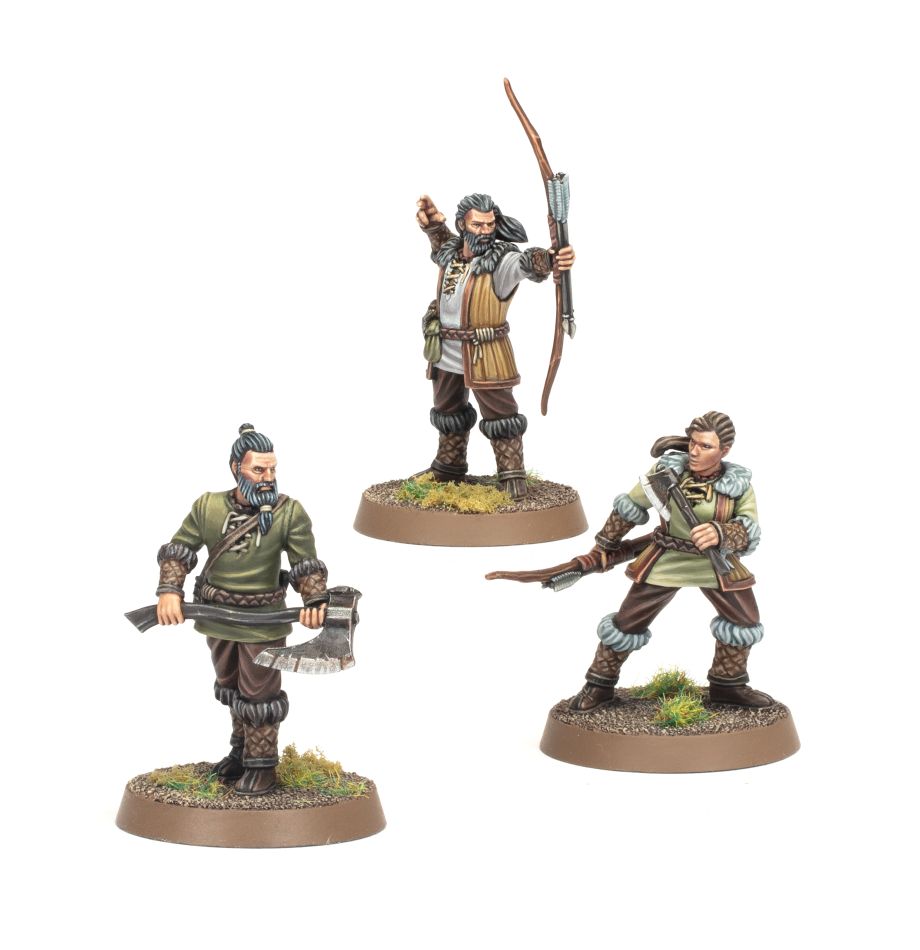
A third example, to act as something of a caveat: Beornings remain genuinely strong this edition, but are missing quite a few tools. They have an efficient battleline, but quite poor mobility. They have an absolute pile of focussed damage output (does it even count as focussed when you’re likely to kill everything you touch?), and the Bears themselves are obviously great anti-hero options. But they have no banner VPs, generally limited archery with no way to mitigate it, and almost no tricks as I’m defining them here. For all this though, they are just so good at the things they do well that they will probably be able to do well regardless, even if their lack of tools will probably keep them out of the very top tier.
Conclusion: bringing it all together

As that last example hopefully showed, you don’t need all of
these tools in order to win games. In fact, there are only a handful of armies
in the whole game that can truly tick every box, and I don’t think any of them
will actually be as strong as some of the less-flexible-but-more-powerful
builds out there.
Nonetheless, these elements are a great way of assessing
army lists, both to see whether a particular way of building them is solid (‘I
don’t have much mobility or ways to deal with archery, maybe I should fit in a
model with March’) and to determine whether the base army is any good (‘Battle
of the Greenfields looks really scary, but it doesn’t have mobility, banner
VPs, anti-hero tech, tricks, or even much focussed damage output. Maybe it’s a
little overhyped’).
I hope you enjoyed this more analytical article, and you
find it helpful when choosing and building armies in the future. I’ve got all
sorts of exciting content coming out soon, ranging from several much-delayed tournament reports, to how to win your hard matchups and smash your easy ones, tips for warband construction, and much more. So keep your
eyes out for exciting things to come!
Until next come, may your list always have enough of these elements to compete!
Thanks for the write up! Definitely lots to consider when building a list. You’re spot on with your points, but I still have hope some unexpected lists will come out of the woodwork as top contenders (there has to be some defenders of the Pelennor combo that takes the cake)
ReplyDeleteGlad you enjoyed! I like to think that considering these points is actually a great way to find those unexpected contenders: working to include as many of them as possible in a list is a great way to find a surprise combo in a list that others have dismissed.
DeleteAnd as far as Pelennor themselves, they're definitely a known powerhouse in some metas. I've actually picked up a couple of solid finishes with them myself in TTS tournaments recently, and Alex Colesante won a big Australian tournament last year with a different variant. So there's a lot of power in the list!
"But it’s certainly clear from this little sample that banners aren’t being the difference maker in many of my games this edition. "
ReplyDeleteI think this line of thinking is missing the big part of why Banner VPs can matter and something you forgot to mention. Starting out with VPs while the opponent doesn't have any is great because it gives you the initiative and forces the opponent to play on your terms. Very much like how Grima works in scenarios like Destroy the Supplies, Storm the Camp or Reconnoitre. The opponent have to do something or they will lose and not just draw.
It forces one player to play a more risky game while the other can play it more safely. It alone won't decide a game very often but it can change the dynamic of a lot of matchups.
Like if you have Halls of Thranduil vs Lothlorien in "To the Death". If there were no banner VPs the halls player could slowly play around and wait until Galadriel fails with her Blinding Light, then move up with their archers and hope Legolas and Tauriel do enough damage to get an advantage that later on turns into a victory. But if that never happens they can just play it out to a draw rather than run into a battle line that is more flexible with their F6 and actual banners, have more models and that can lock down any heroes with their magic. But with banners the Halls player is forced to engage no matter what and the Lothlorien player can safely camp knowing the opponent have to move to them. The game is likely to end with a points difference larger than what the banner VPs give but then reason that those VPs didn't have a big impact is completely false. They are the reason to begin with that it didn't turn into a 0-0 or decided by doing 1 random leader VP from a bow shot.
For some armies like the Eagles it might not be much of a problem since they aren't very good in a lot of scenarios playing for a draw with that low model count while also being very good at actually taking out banners. Same with more aggressive players or lists that won't or can't really play more defensively for a draw or a Minor Victory/Loss. But for the average list out there that have 1 big hero, 1-2 smaller heroes, 30+ warriors, 1/3 bows and 0-5 mobility models those banner VPs can be really impactful.
I even had a game at a tournament this past weekend where I won in Storm the Camp thanks to having a banner while the opponent didn't. Defenders of Helm's Deep vs Men of the West. We both captured each others camp but I managed to use my higher model count to bog down his heroes while my Banner sneaked into his camp. Had there be no banner VPs that game would have gone very different.
In a later round banner VPs helped me win "Lead from the Front" indirectly. I could easily break my opponent and have a large chance of having his banner flee unless he used one of his heroes to stand back and do nothing besides provide stand fasts. So either he gives up an objective or banner VPs. Final score difference were 3x what Banner VPs would give me but the fact I had much more shooting so Banner VPs could matter forced his move and I could take a big advantage from that and score even more VPs.
Thanks for the comment! I actually have a full article written up on banners for somewhere down the pipeline, so I'll try not to steal too much of its thunder now, but I'm of the view that even these strategic advantages can be somewhat overrated.
DeleteYour example of TtD between two similarly-shooty lists is a telling one I think. Your analysis there is spot on, in that the banner does make a huge difference there specifically. But change either the scenario or the matchup and it becomes way less impactful. Swap Lothlorien across to a less-shooty list like Minas Morgul or White Hand, and now Halls is totally happy to just take the shooting war. Sure, they're down on VPs, but if they get endless turns of shooting in then they're likely gonna win anyway. Unless you're playing to a really tight time limit or someone is really slow playing, White Hand/Minas Morgul do eventually have to engage or they're going to get broken/have their leader or other heroes picked out/lose their banner anyway. Or similarly, swap Halls to Depths and now it doesn't matter that they have no banner VPs because they would have needed to attack into the hail of arrows anyway.
Alternatively, flip to another scenario like Supplies and now a player who sits back and relies on their banner VPs is probably going to have their objectives swarmed and be in a losing position that way. Same deal in most other banner missions, like Seize or Hold Ground. I'd say that only TtD and maybe Clash allow for lists to really coast on banners, and again only when shooting is fairly even between them. Otherwise, in killing scenarios the person who is forced to engage is probably going to be the person with worse shooting anyway.
None of this is to say that banner VPs don't matter, they're clearly valuable (hence me listing them here and saying that a list without them needs a bit more power elsewhere!). Clearly your games of Storm and Lead are good examples of that. I admit that your Lead opponent's choices seem a bit questionable to me (why was the banner not just in a big clump of dudes when he knew he'd need his heroes in the midfield for VPs?), but your banner is clearly getting you value there regardless.
My point was mostly just to push back on the idea that banner access is as determinative as many people in the community think. Not having access to banner VPs is a downside for a list, but I think it's a much smaller one than missing an efficient battleline or source of focussed damage output.
I have many more thoughts on this, but I'll hold them for the later article where we can continue this discussion in greater detail!
Going full archers has always been a rule I follow, however I think archers are quite nuanced: defensive shooting, attacking shooting and control shooting. To use an isengard example crossbow are very good offensive shooting, dunlending/Hillman archers are good at controlling shooting and orcs are good at defensive shooting. Maybe overthinking but it always helped me design a lost when I thought how the shooting would be used in game.
Delete